Selasa, 30 Oktober 2012

[N605.Ebook] Ebook Download Jesus: My Autobiography, by Tina Louise Spalding

Ebook Download Jesus: My Autobiography, by Tina Louise Spalding

Are you thinking about mostly books Jesus: My Autobiography, By Tina Louise Spalding If you are still puzzled on which one of the book Jesus: My Autobiography, By Tina Louise Spalding that ought to be acquired, it is your time to not this website to try to find. Today, you will certainly need this Jesus: My Autobiography, By Tina Louise Spalding as the most referred book and most required publication as resources, in various other time, you could delight in for a few other publications. It will certainly rely on your prepared needs. Yet, we consistently suggest that publications Jesus: My Autobiography, By Tina Louise Spalding can be a terrific invasion for your life.

Jesus: My Autobiography, by Tina Louise Spalding

Jesus: My Autobiography, by Tina Louise Spalding


Jesus: My Autobiography, by Tina Louise Spalding

Ebook Download Jesus: My Autobiography, by Tina Louise Spalding

This is it guide Jesus: My Autobiography, By Tina Louise Spalding to be best seller just recently. We provide you the very best deal by obtaining the amazing book Jesus: My Autobiography, By Tina Louise Spalding in this site. This Jesus: My Autobiography, By Tina Louise Spalding will not just be the sort of book that is hard to find. In this internet site, all types of books are provided. You can look title by title, author by writer, and also publisher by author to discover the most effective book Jesus: My Autobiography, By Tina Louise Spalding that you can review now.

The perks to take for checking out the e-books Jesus: My Autobiography, By Tina Louise Spalding are involving improve your life top quality. The life quality will certainly not just about just how much expertise you will obtain. Also you read the enjoyable or enjoyable publications, it will aid you to have enhancing life quality. Really feeling fun will lead you to do something completely. Furthermore, the e-book Jesus: My Autobiography, By Tina Louise Spalding will certainly give you the driving lesson to take as an excellent need to do something. You may not be useless when reading this publication Jesus: My Autobiography, By Tina Louise Spalding

Don't bother if you do not have enough time to go to the e-book shop and also look for the favourite book to check out. Nowadays, the online e-book Jesus: My Autobiography, By Tina Louise Spalding is involving provide ease of reviewing behavior. You might not have to go outdoors to browse guide Jesus: My Autobiography, By Tina Louise Spalding Searching and downloading guide qualify Jesus: My Autobiography, By Tina Louise Spalding in this article will certainly offer you much better solution. Yeah, online publication Jesus: My Autobiography, By Tina Louise Spalding is a type of electronic book that you can obtain in the link download supplied.

Why ought to be this on-line book Jesus: My Autobiography, By Tina Louise Spalding You might not have to go someplace to check out the e-books. You could review this publication Jesus: My Autobiography, By Tina Louise Spalding every time and every where you desire. Also it remains in our extra time or feeling bored of the jobs in the workplace, this corrects for you. Get this Jesus: My Autobiography, By Tina Louise Spalding now and be the quickest person who completes reading this e-book Jesus: My Autobiography, By Tina Louise Spalding

Jesus: My Autobiography, by Tina Louise Spalding

“I have come at this time, in this place, and through this being to speak my truth, to speak the story of my life — the true story of my life.”

The purpose of this book is to clarify, to tell the truth, and to share my energies with you so that you can begin the transformation of your mind and, therefore, the transformation of your heart and your world. It is in the misteachings that have been associated with my name that much death and pain has been caused and that much guilt and self-recrimination has been expressed. That was not my purpose; that was not my lesson.
This story will begin the change. It will not make the change. It will facilitate turning the key in the lock, but you must open the door and walk through it into a new realm that is opened by this information. That is your responsibility. We can only bring you the message, this channel and I. We can only work together to transmit the information, but it is through your actions and your transformation that you will see a change in your world, a change in the subjective world that is manufactured from your beliefs, your thoughts, and your feelings.
I talk about the truth of my birth and the truth of my life. I cover some stories that are recounted in the Bible and tell you the true story of those events. I describe some of my personal traits, my human traits, and I define what I am, who I am, and why these things happened. You will be able to understand the truth, and you will begin this reconditioning, this retooling of your mind — of your thoughts and beliefs — on this subject of my life, my meaning, and my purpose, for it is a long process. The time is ripe. The need for a spiritual revolution is here.
— Jesus

  • Sales Rank: #51231 in eBooks
  • Published on: 2015-06-17
  • Released on: 2015-06-17
  • Format: Kindle eBook

From the Back Cover
"I have come at this time, in this place, and through this being to speak my truth, to speak the story of my life the true story of my life."

The purpose of this book is to clarify, to tell the truth, and to share my energies with you so that you can begin the transformation of your mind and, therefore, the transformation of your heart and your world. It is in the misteachings that have been associated with my name that much death and pain has been caused and that much guilt and self-recrimination has been expressed. That was not my purpose; that was not my lesson.

This story will begin the change. It will not make the change. It will facilitate turning the key in the lock, but you must open the door and walk through it into a new realm that is opened by this information. That is your responsibility. We can only bring you the message, this channel and I. We can only work together to transmit the information, but it is through your actions and your transformation that you will see a change in your world, a change in the subjective world that is manufactured from your beliefs, your thoughts, and your feelings.

I talk about the truth of my birth and the truth of my life. I cover some stories that are recounted in the Bible and tell you the true story of those events. I describe some of my personal traits, my human traits, and I define what I am, who I am, and why these things happened. You will be able to understand the truth, and you will begin this reconditioning, this retooling of your mind of your thoughts and beliefs on this subject of my life, my meaning, and my purpose, for it is a long process. The time is ripe. The need for a spiritual revolution is here. Jesus"

About the Author
Tina Louise Spalding began channeling Jesus during the summer of 2013, when he appeared in her book Great Minds Speak to You. It proved to be a great challenge not only to accept the assignment he offered her -- writing this autobiography -- but to also face many of the fears that this unusual experience brought up. Tina has been asked to channel for Jesus on an ongoing basis, and she intends to provide public offerings of his teachings in the future.

Most helpful customer reviews

23 of 25 people found the following review helpful.
Telling it how it is... or was
By B. Herrera
I had been having questions about the life of Jesus, and I ran into some videos of Tina Louise Spalding. She channels Jesus and many of the things she talked about seemed much more true than what I had been thought in church and from family and friends. I follow the teachings of Buddha and I believe in something like Cosmic Intelligence, or the Laws of the Universe, but since I have been raised Roman Catholic, I always run into one or two issues that deal with the Catholic faith. The book definitively deals with Jesus' life, appropriately starting before conception, and past his crucifixion. But he doesn't just stop telling us the story of his life. He also takes the opportunity to impart his teachings, not the RC church's teachings, as well as explaining the laws of the Universe.

This book is best understood if you are familiar with New Age terms like law of attraction, past life, incarnation, channeling, abundance, etc. Also, Jesus touches controversial topics like death, sexuality, abortion, drugs, Mary Magdalene, immaculate conception, etc. This is not a mainstream read or biblical study material, instead it is a rebel yell to make you wake up! A very good book indeed.

7 of 7 people found the following review helpful.
Great Book!
By TSS
This book was amazing. Thank you Tina Spalding for being brave enough to share this information. I was so curious and knew there was so much more to the life of Jesus. This book contained many of the answers I was in search of and provided answers to questions I did not even think to ask. If you are curious about the life of Jesus this book has the answers. I recommend it to anyone in search of the truth.

10 of 11 people found the following review helpful.
Very insightful!
By Liz
It's so refreshing to finally get more of the truth. After having read the Bible cover to cover multiple times, I've noticed that there is so much conflicting information. I had so many questions about what Jesus' real purpose was on Earth, and this book answered many of them.

See all 115 customer reviews...

Jesus: My Autobiography, by Tina Louise Spalding PDF
Jesus: My Autobiography, by Tina Louise Spalding EPub
Jesus: My Autobiography, by Tina Louise Spalding Doc
Jesus: My Autobiography, by Tina Louise Spalding iBooks
Jesus: My Autobiography, by Tina Louise Spalding rtf
Jesus: My Autobiography, by Tina Louise Spalding Mobipocket
Jesus: My Autobiography, by Tina Louise Spalding Kindle

Jesus: My Autobiography, by Tina Louise Spalding PDF

Jesus: My Autobiography, by Tina Louise Spalding PDF

Jesus: My Autobiography, by Tina Louise Spalding PDF

Minggu, 28 Oktober 2012

[C265.Ebook] Ebook Download The Birthday Book, by Censorinus

Ebook Download The Birthday Book, by Censorinus

The Birthday Book, By Censorinus. In undergoing this life, lots of people always aim to do and obtain the finest. New expertise, encounter, session, and also every little thing that can boost the life will be done. Nevertheless, many individuals occasionally really feel puzzled to get those points. Really feeling the limited of encounter as well as resources to be much better is one of the does not have to have. Nonetheless, there is a very straightforward thing that could be done. This is what your teacher consistently manoeuvres you to do this one. Yeah, reading is the solution. Reading a book as this The Birthday Book, By Censorinus as well as other references can enhance your life high quality. Just how can it be?

The Birthday Book, by Censorinus

The Birthday Book, by Censorinus


The Birthday Book, by Censorinus

Ebook Download The Birthday Book, by Censorinus

Discover much more encounters as well as knowledge by reviewing guide qualified The Birthday Book, By Censorinus This is a book that you are looking for, isn't really it? That corrects. You have concerned the ideal site, after that. We consistently offer you The Birthday Book, By Censorinus and one of the most preferred books on the planet to download and appreciated reading. You might not neglect that seeing this collection is a function and even by unintended.

When obtaining this book The Birthday Book, By Censorinus as referral to review, you can obtain not just motivation however also new expertise and lessons. It has even more compared to common perks to take. What type of book that you review it will work for you? So, why must get this book qualified The Birthday Book, By Censorinus in this article? As in web link download, you could get guide The Birthday Book, By Censorinus by online.

When obtaining guide The Birthday Book, By Censorinus by on-line, you could read them any place you are. Yeah, even you remain in the train, bus, waiting listing, or various other locations, on-line e-book The Birthday Book, By Censorinus could be your good pal. Each time is an excellent time to review. It will boost your understanding, enjoyable, entertaining, lesson, as well as experience without spending even more money. This is why on-line e-book The Birthday Book, By Censorinus ends up being most desired.

Be the first who are reading this The Birthday Book, By Censorinus Based upon some factors, reading this publication will supply more perks. Also you require to review it tip by action, web page by web page, you can complete it whenever and also anywhere you have time. As soon as more, this online e-book The Birthday Book, By Censorinus will offer you simple of reviewing time and activity. It likewise provides the encounter that is budget friendly to reach and get considerably for better life.

The Birthday Book, by Censorinus

Nearly 2,000 years ago, the Roman scholar Censorinus bestowed upon his best friend a charming birthday present: The Birthday Book, which appears here in its long-awaited first English translation. Laying out everything he knew about birthdays, the book starts simply, but by the conclusion of this brief yet brilliant gem, Censorinus has sketched a glorious vision of a universe ruled by harmony and order, where the microcosm of the child in the womb corresponds to the macrocosm of the planets. Alternately serious and playful, Censorinus touches on music, history, astronomy, astrology, and every aspect of time as it was understood in third-century Rome. He also provides ancient answers to perennial questions: Why does the day begin at midnight? Where did Leap Year come from? Which came first, the chicken or the egg?

Embodying the proverbial gift that keeps on giving, The Birthday Book has long been treasured by scientists, poets, and scholars, and Holt Parker’s graceful and lively new translation—accompanied by an illuminating introduction and detailed notes—is itself a present for Latinists, historians of science, and anyone looking for an unusual birthday gift.

  • Sales Rank: #2477848 in Books
  • Published on: 2007-01-15
  • Original language: English
  • Number of items: 1
  • Dimensions: 7.00" h x .60" w x 5.00" l, .47 pounds
  • Binding: Hardcover
  • 120 pages

Review
“It was already incredible enough that English-language readers would have to wait until the twenty-first century for a complete translation of a book by an author so important to the history of science that he has a crater on the moon named after him. But it was just as incredible that, after the long wait, Censorinus would have the good fortune to fall into the hands of Holt Parker, whose crisp rendering of the original Latin is ingenious and lovingly accurate.”

(David Wray, University of Chicago)

“Holt Parker has succeeded in spades with this translation. It will appeal not only to scholars of history, literature, and the history of science, but also to anyone interested in the details of Roman life, attitudes, and perspectives on the world.” (Joseph Pucci, Brown University)

"In The Birthday Book, Censorinus distils the wisdom of several strains of philosophy, extracting whatever seems to have any bearing on births, days and birthdays: theories of the origin of the human species, the formation of the individual foetus, the principles of astrology, the ages of man, the nature of time, eons, centuries, years, months, days and hours. . . . Parker’s useful notes expand on Censorinus’ references and fill in the gaps." (Thomas Jones London Review of Books 2007-02-22)

"A great achievement, not to say an astonishing one: this translation, the first translation of Censorinus into English, is both exacting and elegant. . . . It would make a natural addition to courses on ancient culture, history, or science. . . . The book itself is charming. . . . It would make a lovely gift." (Benjamin Stevens Bryn Mawr Classical Review 2007-03-22)

"Among birthday gifts, even of the quirkily unique kind, the treatise De die natali by the 3rd-century AD writer Censorinus still must be among the top ten for both idiosyncrasy and learning—a feat that even landed its author a place on the moon, where a crater is named after him. . . . Holt Parker and the University of Chicago Press have entered into the spirit of this enterprise nicely. The book is produced handsomely in small format, and the text is interspersed with some helpful diagrams and illustrations. In addition, there is a useful glossary and notes that do not smother. Most important, Parker well catches the various moods of [The Birthday Book]." (Karl Galinsky Times Higher Education Supplement 2007-04-06)

"Very good fun. . . . Full of gloriously pointless information and with useful notes attached, it makes perfect bed-time reading that will relieve you of any postmodern intellectual anxieties that you may be feeling." (Journal of Classical Teaching)

"As anyine who has worked on matters calendrical in the Greek and Roman worlds will know, the Birthday Book is a mine of information. . . . More people should certainly find Censorinus valuable and this excellent translation will assist in the wider dissemination of the text." (Robert Hannah Aestimatio)

About the Author

Holt Parker is professor of classics at the University of Cincinnati.

Most helpful customer reviews

0 of 0 people found the following review helpful.
Five Stars
By Μῶμος
Now just as much an ἄγαλμα as then.

0 of 0 people found the following review helpful.
Some accessible Roman writing on the natural world
By Jordan Bell
Most of the writing we have by Roman authors is verse rather than prose. Most of the prose that exists is political history or about rhetoric, and there is little about the planets, animals, music, mathematics, or metaphysics. This short book by Censorinus is made of short essays about things having to do with birthdays, like the development of the fetus, astrology, the notion of a Great Year, and calendars. It is pleasant to read and there are competent notes by the translator. Good translations and commentaries on prose works like this see what an educated Roman knew and thought worth writing about, and are a great contribution to the history of ideas.

0 of 0 people found the following review helpful.
Interesting treatise from 248 AD Full of information, challenges ...
By Kurt
Interesting treatise from 248 AD

Full of information, challenges, curiosities

See all 4 customer reviews...

The Birthday Book, by Censorinus PDF
The Birthday Book, by Censorinus EPub
The Birthday Book, by Censorinus Doc
The Birthday Book, by Censorinus iBooks
The Birthday Book, by Censorinus rtf
The Birthday Book, by Censorinus Mobipocket
The Birthday Book, by Censorinus Kindle

The Birthday Book, by Censorinus PDF

The Birthday Book, by Censorinus PDF

The Birthday Book, by Censorinus PDF

[C299.Ebook] Ebook Quantum Chemistry (7th Edition), by Ira N. Levine

Ebook Quantum Chemistry (7th Edition), by Ira N. Levine

This is why we suggest you to consistently visit this web page when you need such book Quantum Chemistry (7th Edition), By Ira N. Levine, every book. By online, you may not go to get the book store in your city. By this online collection, you can locate the book that you truly wish to review after for very long time. This Quantum Chemistry (7th Edition), By Ira N. Levine, as one of the advised readings, oftens remain in soft file, as all of book collections right here. So, you might additionally not await few days later to obtain as well as read the book Quantum Chemistry (7th Edition), By Ira N. Levine.

Quantum Chemistry (7th Edition), by Ira N. Levine

Quantum Chemistry (7th Edition), by Ira N. Levine


Quantum Chemistry (7th Edition), by Ira N. Levine

Ebook Quantum Chemistry (7th Edition), by Ira N. Levine

Quantum Chemistry (7th Edition), By Ira N. Levine. Is this your leisure? Just what will you do after that? Having spare or spare time is really amazing. You could do every little thing without force. Well, we expect you to exempt you couple of time to read this e-book Quantum Chemistry (7th Edition), By Ira N. Levine This is a god e-book to accompany you in this free time. You will not be so difficult to know something from this e-book Quantum Chemistry (7th Edition), By Ira N. Levine Much more, it will certainly help you to obtain much better details and experience. Also you are having the terrific jobs, reviewing this book Quantum Chemistry (7th Edition), By Ira N. Levine will certainly not add your thoughts.

The means to obtain this publication Quantum Chemistry (7th Edition), By Ira N. Levine is really easy. You could not go for some locations and invest the time to only find the book Quantum Chemistry (7th Edition), By Ira N. Levine As a matter of fact, you could not consistently obtain guide as you agree. But right here, only by search and also discover Quantum Chemistry (7th Edition), By Ira N. Levine, you can get the lists of guides that you truly expect. Often, there are several books that are showed. Those books of course will certainly amaze you as this Quantum Chemistry (7th Edition), By Ira N. Levine compilation.

Are you interested in mainly publications Quantum Chemistry (7th Edition), By Ira N. Levine If you are still perplexed on which of guide Quantum Chemistry (7th Edition), By Ira N. Levine that must be purchased, it is your time to not this website to look for. Today, you will certainly require this Quantum Chemistry (7th Edition), By Ira N. Levine as the most referred book and many needed publication as sources, in various other time, you can delight in for some other books. It will certainly depend upon your eager requirements. However, we constantly suggest that publications Quantum Chemistry (7th Edition), By Ira N. Levine can be a terrific invasion for your life.

Also we talk about guides Quantum Chemistry (7th Edition), By Ira N. Levine; you could not locate the published publications below. A lot of compilations are provided in soft file. It will precisely give you a lot more advantages. Why? The first is that you might not need to carry guide everywhere by satisfying the bag with this Quantum Chemistry (7th Edition), By Ira N. Levine It is for guide is in soft documents, so you could wait in device. Then, you could open the device anywhere as well as read guide effectively. Those are some few perks that can be obtained. So, take all advantages of getting this soft data book Quantum Chemistry (7th Edition), By Ira N. Levine in this web site by downloading in link given.

Quantum Chemistry (7th Edition), by Ira N. Levine

Known for its solid presentation of mathematics, this bestseller is a rigorous but accessible introduction to both quantum chemistry and the math needed to master it. Quantum Chemistry, Seventh Edition covers quantum mechanics, atomic structure, and molecular electronic structure, and provides a thorough, unintimidating treatment of operators, differential equations, simultaneous linear equations, and other areas of required math. Practical for readers in all branches of chemistry, the new edition reflects the latest quantum chemistry research and methods of computational chemistry, and clearly demonstrates the usefulness and limitations of current quantum-mechanical methods for the calculation of molecular properties.

  • Sales Rank: #196333 in Books
  • Brand: Brand: Prentice Hall
  • Published on: 2013-02-16
  • Original language: English
  • Number of items: 1
  • Dimensions: 10.10" h x 1.40" w x 8.00" l, 3.10 pounds
  • Binding: Hardcover
  • 720 pages
Features
  • Used Book in Good Condition

About the Author
Ira N. Levine received his Ph.D. in General Chemistry from Harvard University in 1963. He specializes in both physical and quantum chemistry. Currently, he is a professor at the City University of New York, Brooklyn College.

Most helpful customer reviews

5 of 5 people found the following review helpful.
An excellent book!
By Alexandre A. Souza
This is one of the best books on the subject. It is is very didactic. This is a Quantum Chemistry book. I have seen Physicists coming here to depreciate this book, because they think this is a book for them. This is not. Physicists, go Cohen, Griffths, and other Quantum Mechanics books. This one is for Chemists who want to deal theoretically with atoms and molecules, and to prepare Chemists for the next step, which is programming, for what they can be prepared posteriorly through Szabo and Ostlund, Modern Quantum Chemistry excellent book. This Levine book is brilliant.

6 of 6 people found the following review helpful.
An excellent book
By Alexandre A. Souza
This is one of the best books on the subject. It is is very didactic. This is a Quantum Chemistry book. I have seen Physicists coming here to depreciate this book, because they think this is a book for them. This is not. Physicists, go Cohen, Griffths, and other Quantum Mechanics books. This one is for Chemists who want to deal theoretically with atoms and molecules, and to prepare Chemists for the next step, which is programming, for what they can be prepared posteriorly through Szabo and Ostlund, Modern Quantum Chemistry excellent book. This Levine book is brilliant.

3 of 3 people found the following review helpful.
The 7th (and sadly the last) Edition
By J.J.Coupling
It was with great sadness that I learned of the passing of Professor Ira N. Levine last month (December 2015). I was among the first students in his debut class in quantum chemistry back in the late 1960's. We used the zeroth edition of this book as it was being written, delivered to the students - in mimeograph form - one chapter at a time by Prof. Levine. As a hobby, I've purchased and read subsequent editions over the years even though my professional career took me into engineering rather than theoretical chemistry.

The book has remained at the pinnacle of QC texts for advanced undergraduate, graduate, and self-study use. This 7th edition is no exception. Here's why: (1) it covers the necessary background mathematics in an integrated, as-needed manner, (2) all topics are treated with an appropriate "goldilocks" degree of rigor, neither overly formalized nor overly simplified, (3) the text is supplemented by excellent - sometimes quite challenging - problem sets, (4) numerous footnotes to the literature are given throughout the book for students who want to chase down subtle points, and (5) modern topics in QC, such as computational electron-correlation and molecular dynamics methods, are fully discussed. Overall, the text is written with great clarity and precision.

This is not a textbook of quantum physics generally, but of quantum chemistry specifically. There are the obligatory explanations about the counter-intuitive nature of quantum mechanics along with various historical digressions about the development of non-classical physics. But this is a chemistry book. And it's among the best.

See all 14 customer reviews...

Quantum Chemistry (7th Edition), by Ira N. Levine PDF
Quantum Chemistry (7th Edition), by Ira N. Levine EPub
Quantum Chemistry (7th Edition), by Ira N. Levine Doc
Quantum Chemistry (7th Edition), by Ira N. Levine iBooks
Quantum Chemistry (7th Edition), by Ira N. Levine rtf
Quantum Chemistry (7th Edition), by Ira N. Levine Mobipocket
Quantum Chemistry (7th Edition), by Ira N. Levine Kindle

Quantum Chemistry (7th Edition), by Ira N. Levine PDF

Quantum Chemistry (7th Edition), by Ira N. Levine PDF

Quantum Chemistry (7th Edition), by Ira N. Levine PDF

Sabtu, 20 Oktober 2012

[Q185.Ebook] Free PDF Doorways To Deception, by HAMMOND MAC

Free PDF Doorways To Deception, by HAMMOND MAC

If you ally require such a referred Doorways To Deception, By HAMMOND MAC book that will certainly offer you worth, get the best seller from us now from several popular authors. If you wish to enjoyable books, several novels, tale, jokes, and also much more fictions collections are likewise launched, from best seller to the most recent launched. You might not be puzzled to enjoy all book collections Doorways To Deception, By HAMMOND MAC that we will provide. It is not concerning the prices. It's about what you require now. This Doorways To Deception, By HAMMOND MAC, as one of the very best vendors below will certainly be among the appropriate choices to review.

Doorways To Deception, by HAMMOND MAC

Doorways To Deception, by HAMMOND MAC


Doorways To Deception, by HAMMOND MAC

Free PDF Doorways To Deception, by HAMMOND MAC

Doorways To Deception, By HAMMOND MAC When composing can transform your life, when writing can enrich you by offering much money, why do not you try it? Are you still extremely baffled of where understanding? Do you still have no concept with just what you are going to compose? Now, you will need reading Doorways To Deception, By HAMMOND MAC A great author is an excellent viewers at once. You can define how you compose depending on what publications to read. This Doorways To Deception, By HAMMOND MAC can assist you to resolve the trouble. It can be among the appropriate sources to develop your composing ability.

As we specified in the past, the modern technology helps us to consistently acknowledge that life will be consistently less complicated. Reviewing publication Doorways To Deception, By HAMMOND MAC behavior is also one of the perks to get today. Why? Technology can be made use of to offer guide Doorways To Deception, By HAMMOND MAC in only soft data system that could be opened up every time you desire as well as almost everywhere you need without bringing this Doorways To Deception, By HAMMOND MAC prints in your hand.

Those are a few of the advantages to take when obtaining this Doorways To Deception, By HAMMOND MAC by on-line. Yet, just how is the means to get the soft file? It's very best for you to visit this web page since you can obtain the web link web page to download and install guide Doorways To Deception, By HAMMOND MAC Simply click the link offered in this write-up as well as goes downloading. It will certainly not take significantly time to obtain this book Doorways To Deception, By HAMMOND MAC, like when you should go with book shop.

This is additionally among the reasons by getting the soft data of this Doorways To Deception, By HAMMOND MAC by online. You could not need even more times to spend to see the publication shop as well as hunt for them. Occasionally, you also don't discover guide Doorways To Deception, By HAMMOND MAC that you are looking for. It will certainly throw away the moment. Yet here, when you visit this page, it will be so easy to obtain and also download and install guide Doorways To Deception, By HAMMOND MAC It will not take sometimes as we state previously. You could do it while doing something else in the house or perhaps in your office. So easy! So, are you doubt? Simply practice just what we provide here as well as review Doorways To Deception, By HAMMOND MAC exactly what you love to read!

Doorways To Deception, by HAMMOND MAC

Jesus' warning was clear and sobering. Your enemy, Satan, comes only to kill, steal and destroy. But how much thought have you given to uncovering and disarming Satan's deceitful tactics? Are you aware of the many devious ways he can infiltrate your heart and mind - starting a chain of heartache, suffering and destruction? It's time to rip off the mask of the enemy's lies and find the freedom to enjoy the abundant life God wants you to experience.

  • Sales Rank: #1825067 in Books
  • Brand: Brand: WORD And SPIRIT RESOURCES, LLC
  • Published on: 2010-07-01
  • Original language: English
  • Number of items: 1
  • Dimensions: 9.00" h x .50" w x 5.90" l, .50 pounds
  • Binding: Paperback
  • 174 pages
Features
  • Used Book in Good Condition

About the Author
Mac Hammond is founder and Pastor of Living Word Christian Center, a large growing church in Minneapolis, Minnesota. He also hosts a weekly television broadcast entitled, The Winner's Way.In addition, he has authored several books including the widely distributed Heirs Together: Solving the Mystery of a Satisfying Marriage and Winning the World: Becoming the Bold Soul Winner God Created You to Be.Mac is broadly acclaimed for his ability to apply the Word of God to practical situations and the challenges of daily living.

Most helpful customer reviews

0 of 0 people found the following review helpful.
A MUST TO READ BOOK FOR EVERY ONE
By Amazon Customer
A very well WRITEN book.
I bought a paper back copy of this book 2002 and it has always inspired me greatly. Now IAM looking foe a kindled edition but you do not seem to have it on kindle. I encourage to put it on kindle many who cannot access it in other print form can obtain it on kindle. It is also a very good teaching tool for family, small Christian groups and indeed in church, because it provides for an in depth understanding of one self as well as warns you of the ares you must guard against satan's whiles and SATAN'S lies.. VERY GOOD WORK MAC. GOD BLESS YOU WHERE EVER YOU ARE.
RONNIE LUSAKS ZAMBIA.

0 of 0 people found the following review helpful.
Doorways to Deception
By Jeanne
Pastor Mac Hammond entreats us all to fight back against deception with knowledge! Jesus said of the devil" He's a liar and a thief and a murderer and has been since the very beginning". Deception is the very biggest tool the devil has used against all mankind since the Garden of Eden. Pastor Mac exposes the ruses of satan where by he would get us to turn our backs upon God. If satan can not seduce us away from God and knowing about Him he would offend us away (by using others). Pastor Mac claims if satan can not deceive us he can not defeat us! This book is valuable insight for the end of days spirit warrior who would battle evil.

0 of 0 people found the following review helpful.
Five Stars
By Aunt Sue
Great Book

See all 4 customer reviews...

Doorways To Deception, by HAMMOND MAC PDF
Doorways To Deception, by HAMMOND MAC EPub
Doorways To Deception, by HAMMOND MAC Doc
Doorways To Deception, by HAMMOND MAC iBooks
Doorways To Deception, by HAMMOND MAC rtf
Doorways To Deception, by HAMMOND MAC Mobipocket
Doorways To Deception, by HAMMOND MAC Kindle

Doorways To Deception, by HAMMOND MAC PDF

Doorways To Deception, by HAMMOND MAC PDF

Doorways To Deception, by HAMMOND MAC PDF

Kamis, 18 Oktober 2012

[D305.Ebook] Free Ebook The First and Second Sikh Wars, by Reginald George Burton

Free Ebook The First and Second Sikh Wars, by Reginald George Burton

It can be one of your early morning readings The First And Second Sikh Wars, By Reginald George Burton This is a soft data publication that can be got by downloading from on the internet book. As known, in this innovative era, innovation will certainly ease you in doing some activities. Also it is merely reading the presence of book soft file of The First And Second Sikh Wars, By Reginald George Burton can be added attribute to open up. It is not only to open as well as conserve in the device. This moment in the morning as well as various other leisure time are to read the book The First And Second Sikh Wars, By Reginald George Burton

The First and Second Sikh Wars, by Reginald George Burton

The First and Second Sikh Wars, by Reginald George Burton


The First and Second Sikh Wars, by Reginald George Burton

Free Ebook The First and Second Sikh Wars, by Reginald George Burton

The First And Second Sikh Wars, By Reginald George Burton. Happy reading! This is what we wish to state to you that love reading so much. Just what concerning you that declare that reading are only commitment? Never mind, reading practice needs to be begun with some certain factors. One of them is reviewing by responsibility. As just what we wish to provide here, guide entitled The First And Second Sikh Wars, By Reginald George Burton is not kind of obligated e-book. You can appreciate this publication The First And Second Sikh Wars, By Reginald George Burton to review.

As we explained before, the technology assists us to constantly acknowledge that life will certainly be consistently much easier. Checking out e-book The First And Second Sikh Wars, By Reginald George Burton practice is also one of the perks to obtain today. Why? Technology could be utilized to provide the book The First And Second Sikh Wars, By Reginald George Burton in only soft data system that can be opened up every single time you really want and everywhere you need without bringing this The First And Second Sikh Wars, By Reginald George Burton prints in your hand.

Those are a few of the perks to take when getting this The First And Second Sikh Wars, By Reginald George Burton by online. However, exactly how is the means to obtain the soft documents? It's extremely right for you to see this page due to the fact that you could get the web link web page to download and install the e-book The First And Second Sikh Wars, By Reginald George Burton Simply click the link offered in this article and also goes downloading. It will certainly not take much time to obtain this e-book The First And Second Sikh Wars, By Reginald George Burton, like when you have to opt for publication establishment.

This is also among the reasons by getting the soft data of this The First And Second Sikh Wars, By Reginald George Burton by online. You could not need more times to invest to visit the publication establishment as well as hunt for them. Occasionally, you likewise don't find guide The First And Second Sikh Wars, By Reginald George Burton that you are hunting for. It will squander the moment. But below, when you see this web page, it will be so easy to obtain and also download and install the publication The First And Second Sikh Wars, By Reginald George Burton It will certainly not take sometimes as we state before. You can do it while doing another thing in your home or perhaps in your office. So simple! So, are you question? Just practice what we provide here and also review The First And Second Sikh Wars, By Reginald George Burton just what you enjoy to review!

The First and Second Sikh Wars, by Reginald George Burton

The First and Second Sikh Wars of the 1840s were the final battles that secured British domination of the Indian subcontinent for the next century. Noted for both their brutality and sophistication in tactics—with large-scale cavalry clashes, sieges, and artillery and infantry engagements—the wars against the Sikh principalities not only handed control of India to Great Britain, but the defeated Sikh armies ended up becoming some of the most loyal and ablest soldiers of the British Empire. The lessons from these wars also influenced changes in British military policy and strategies, particularly against indigenous peoples. In 1911, the British Army command asked its historical branch in India to prepare a military history of the Sikh Wars. The result, The First and Second Sikh Wars, is a publication rich in detail and analysis and a treasure trove of background information about the British Army in India, Sikh culture at the time, and the battles of Ferozeshah, Aliwal, Chillianwala, and Gujrat. Despite the importance of these wars in the history of both the nineteenth century and the modern era, there are no similar complete narrative accounts of these conflicts available that rely on official records of the period. This facsimile is enhanced by historian Jon Coulston's new introduction and suggestions for further reading.

  • Sales Rank: #1205653 in Books
  • Brand: Brand: Westholme Publishing
  • Published on: 2007-11-30
  • Released on: 2007-11-30
  • Original language: English
  • Number of items: 1
  • Dimensions: 9.25" h x .80" w x 6.50" l, .75 pounds
  • Binding: Paperback
  • 208 pages
Features
  • Used Book in Good Condition

About the Author
Reginald George Burton (1864–1951) was a military historian and author.
Jon Coulston is a historian at St Andrews University, Scotland. He reintroduced Westholme's editions of Cavalry: Its History and Tactics and The Life of Belisarius.

Most helpful customer reviews

See all customer reviews...

The First and Second Sikh Wars, by Reginald George Burton PDF
The First and Second Sikh Wars, by Reginald George Burton EPub
The First and Second Sikh Wars, by Reginald George Burton Doc
The First and Second Sikh Wars, by Reginald George Burton iBooks
The First and Second Sikh Wars, by Reginald George Burton rtf
The First and Second Sikh Wars, by Reginald George Burton Mobipocket
The First and Second Sikh Wars, by Reginald George Burton Kindle

The First and Second Sikh Wars, by Reginald George Burton PDF

The First and Second Sikh Wars, by Reginald George Burton PDF

The First and Second Sikh Wars, by Reginald George Burton PDF

Senin, 15 Oktober 2012

[A922.Ebook] Ebook Who Owns the Future?, by Jaron Lanier

Ebook Who Owns the Future?, by Jaron Lanier

How if your day is started by checking out a publication Who Owns The Future?, By Jaron Lanier But, it remains in your gizmo? Everyone will certainly always touch and us their device when awakening and in early morning activities. This is why, we intend you to also read a book Who Owns The Future?, By Jaron Lanier If you still perplexed ways to obtain guide for your gadget, you can comply with the way below. As here, our company offer Who Owns The Future?, By Jaron Lanier in this internet site.
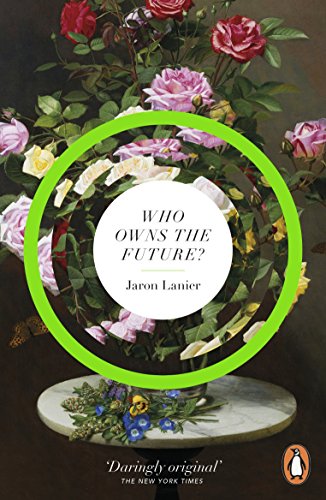
Who Owns the Future?, by Jaron Lanier

Who Owns the Future?, by Jaron Lanier


Who Owns the Future?, by Jaron Lanier

Ebook Who Owns the Future?, by Jaron Lanier

Only for you today! Discover your favourite e-book here by downloading and install and obtaining the soft data of guide Who Owns The Future?, By Jaron Lanier This is not your time to traditionally visit guide establishments to get an e-book. Right here, varieties of book Who Owns The Future?, By Jaron Lanier and collections are offered to download and install. One of them is this Who Owns The Future?, By Jaron Lanier as your recommended e-book. Obtaining this book Who Owns The Future?, By Jaron Lanier by online in this site could be recognized now by going to the link page to download. It will be simple. Why should be below?

It is not secret when hooking up the creating skills to reading. Reading Who Owns The Future?, By Jaron Lanier will certainly make you obtain even more sources and sources. It is a way that could improve just how you overlook and understand the life. By reading this Who Owns The Future?, By Jaron Lanier, you could greater than just what you get from other book Who Owns The Future?, By Jaron Lanier This is a famous publication that is published from renowned author. Seen type the writer, it can be relied on that this book Who Owns The Future?, By Jaron Lanier will provide numerous motivations, regarding the life and also encounter and also every little thing inside.

You could not have to be doubt concerning this Who Owns The Future?, By Jaron Lanier It is easy way to obtain this book Who Owns The Future?, By Jaron Lanier You could just see the set with the link that we provide. Right here, you could buy the book Who Owns The Future?, By Jaron Lanier by on the internet. By downloading Who Owns The Future?, By Jaron Lanier, you can locate the soft documents of this publication. This is the exact time for you to begin reading. Also this is not published publication Who Owns The Future?, By Jaron Lanier; it will specifically provide more advantages. Why? You could not bring the printed book Who Owns The Future?, By Jaron Lanier or stack the book in your residence or the office.

You can finely include the soft data Who Owns The Future?, By Jaron Lanier to the gadget or every computer unit in your office or residence. It will help you to consistently proceed reviewing Who Owns The Future?, By Jaron Lanier whenever you have spare time. This is why, reading this Who Owns The Future?, By Jaron Lanier does not offer you troubles. It will give you crucial resources for you who want to begin creating, covering the similar publication Who Owns The Future?, By Jaron Lanier are different publication area.

Who Owns the Future?, by Jaron Lanier

The “brilliant” and “daringly original” (The New York Times) critique of digital networks from the “David Foster Wallace of tech” (London Evening Standard)—asserting that to fix our economy, we must fix our information economy.

Jaron Lanier is the father of virtual reality and one of the world’s most brilliant thinkers. Who Owns the Future? is his visionary reckoning with the most urgent economic and social trend of our age: the poisonous concentration of money and power in our digital networks.

Lanier has predicted how technology will transform our humanity for decades, and his insight has never been more urgently needed. He shows how Siren Servers, which exploit big data and the free sharing of information, led our economy into recession, imperiled personal privacy, and hollowed out the middle class. The networks that define our world—including social media, financial institutions, and intelligence agencies—now threaten to destroy it.

But there is an alternative. In this provocative, poetic, and deeply humane book, Lanier charts a path toward a brighter future: an information economy that rewards ordinary people for what they do and share on the web.

  • Sales Rank: #2198147 in Books
  • Published on: 1700
  • Original language: English
  • Number of items: 1
  • Dimensions: 7.80" h x .91" w x 5.08" l, .82 pounds
  • Binding: Paperback

Amazon.com Review
An Amazon Best Book of the Month, May 2013: Jaron Lanier's last book, You Are Not a Gadget, was an influential criticism of Web 2.0's crowd-sourced backbone. In Who Owns the Future?, Lanier is interested in how network technologies affect our culture, economy, and collective soul. Lanier is talking about pretty heady stuff--the monopolistic power of big tech companies (dubbed "Siren Servers"), the flattening of the middle class, the obscuring of humanity--but he has a gift for explaining sophisticated concepts with clarity. In fact, what separates Lanier from a lot of techno-futurists is his emphasis on the maintaining humanism and accessibility in technology. In the most ambitious part of the book, Lanier expresses what he believes to be the ideal version of the networked future--one that is built on two-way connections instead of one-way relationships, allowing content, media, and other innovations to be more easily attributed (including a system of micro-payments that lead back to its creator). Is the two-way networked vision of the internet proposed in Who Owns the Future quixotic? Even Lanier seems unsure, but his goal here is to establish a foundation for which we should strive. At one point, Lanier jokingly asks sci-fi author William Gibson to write something that doesn't depict technology as so menacing. Gibson replies, "Jaron, I tried. But it's coming out dark." Lanier is able to conjure a future that's much brighter, and hopefully in his imagination, we are moving closer to that. --Kevin Nguyen

Q&A with Jaron Lanier

Q. Years ago, in the early days of networking, you and your friends asserted that information should be free. What made you change your tune?

A. In the big picture, a great new technology that makes the world more efficient should result in waves of new opportunity. That’s what happened with, say, electricity, telephones, cars, plumbing, fertilizers, vaccinations, and many other examples. Why on earth have the early years of the network revolution been associated with recessions, austerity, jobless recoveries, and loss of social mobility? Something has clearly gone wrong.

The old ideas about information being free in the information age ended up screwing over everybody except the owners of the very biggest computers. The biggest computers turned into spying and behavior modification operations, which concentrated wealth and power.

Sharing information freely, without traditional rewards like royalties or paychecks, was supposed to create opportunities for brave, creative individuals. Instead, I have watched each successive generation of young journalists, artists, musicians, photographers, and writers face harsher and harsher odds. The perverse effect of opening up information has been that the status of a young person’s parents matters more and more, since it’s so hard to make one’s way.

Q. Throughout history, technological revolutions have caused unemployment but also brought about new types of jobs to replace the old ones. What’s different today?

A. Cars can now drive themselves, and cloud services can translate passages between languages well enough to be of practical use. But the role of people in these technologies turned out to be a surprise.

Back in the 1950s, the fantasy in the computer science world was that smart scientists would achieve machine intelligence and profound levels of automation, but that never worked. Instead, vast amounts of “big data” gathered from real people is rehashed to create automation. There are many, many real people behind the curtain.

This should be great news for the future of employment! Multitudes of people are needed in order for robots to speak, drive cars, or perform operations. The only problem is that as the information age is dawning, the ideology of bright young people and newfangled plutocrats alike holds that information should be free.

Q. Who does own the future? What’s up for grabs that will affect our future livelihoods?

A. The answer is indeed up for grabs. If we keep on doing things as we are, the answer is clear: The future will be narrowly owned by the people who run the biggest, best connected computers, which will usually be found in giant, remote cloud computing farms.

The answer I am promoting instead is that the future should be owned broadly by everyone who contributes data to the cloud, as robots and other machines animated by cloud software start to drive our vehicles, care for us when we’re sick, mine our natural resources, create the physical objects we use, and so on, as the 21st century progresses.

Right now, most people are only gaining informal benefits from advances in technology, like free internet services, while those who own the biggest computers are concentrating formal benefits to an unsustainable degree.

Q. What is a “Siren Server” and how does it function?

A. I needed a broad name for the gargantuan cloud computer services that are concentrating wealth and influence in our era. They go by so many names! There are national intelligence agencies, the famous Silicon Valley companies with nursery school names, the stealthy high finance schemes, and others.

All these schemes are quite similar. The biggest computers can predictably calculate wealth and clout on a broad, statistical level. For instance, an insurance company might use massive amounts of data to only insure people who are unlikely to get sick. The problem is that the risk and loss that can be avoided by having the biggest computer still exist. Everyone else must pay for the risk and loss that the Siren Server can avoid.

The interesting thing about the original Homeric Sirens was that they didn’t actually attack sailors. The fatal peril was that sailors volunteered to grant the sirens control of the interaction. That’s what we’re all doing with the biggest computing schemes.

Q. As a solution to the economic problems caused by digital networks, you assert that each one of us should be paid for what we do and share online. How would that work?

A. We’ve all contributed to the fortunes of big Silicon Valley schemes, big finance schemes, and all manner of other schemes which are driven by computation over a network. But our contributions were deliberately forgotten. This is partly due to the ideology of copying without a trace that my friends and I mistakenly thought would lead to a fairer world, back in the day.

The error we made was simple: Not all computers are created equal.

What is clear is that networks could remember where the value actually came from, which is from a very broad range of people. I sketch a way that universal micropayments might solve the problem, though I am not attempting to present a utopian solution. Instead I hope to deprogram people from the “open” ideal to think about networks more broadly. I am certain that once the conversation escapes the bounds of what has become an orthodoxy, better ideas will come about.

Q. Who Owns the Future seems like two books in one. Does it seem that way to you?

A. If all I wanted was sympathy and popularity, I am sure that a critique by itself—without a proposal for a solution—would have been more effective.

It’s true that the fixes put forward in Who Owns the Future are ambitious, but they are presented within an explicitly modest wrapping. I am hoping to make the world safer for diverse ideas about the future. Our times are terribly conformist. For instance, one is either “red” or “blue,” or is accepted by the “open culture” crowd or not. I seek to bust open such orthodoxies by showing that other ideas are possible. So I present an intentionally rough sketch of an alternate future that doesn’t match up with any of the present orthodoxies.

A reality-based, compassionate world is one in which criticism is okay. I dish it out, but I also lay my tender neck out before you.

Q. You’re a musician in addition to being a computer scientist. What insight has that given you?

A. In the 1990s I was signed to a big label, but as a minor artist. I had to compete in an esoteric niche market, as an experimental classical/jazz high prestige sort of artist. That world was highly competitive and professional, and inspired an intense level of effort from me.

I assumed that losing the moneyed side of the recording business would not make all that much of a difference, but I was wrong. I no longer bother to release music. The reason is that it now feels like a vanity market. Self-promotion has become the primary activity of many of my musician friends. Yuk.

When the music is heard, it’s often in the context of automatically generated streams from some cloud service, so the listener doesn’t even know it’s you. Successful music tends to be quite conformist to some pre-existing category, because that way it fits better into the automatic streaming schemes. I miss competing in the intense NYC music scene. Who keeps you honest when the world is drowning in insincere flattery?

So here I am writing books. Hello book critics!

From Booklist
The author, a computer scientist and �digital-media pioneer, describes the negative effects on our economy (such as the recent recession and damaged middle class) by digital networks, defined as not only the Internet and the Web, but also other networks operated by outfits like financial institutions and intelligence agencies where the phenomenon of power and money becomes concentrated around the people who operate the most central computers in a network, undervaluing everyone else. Information is considered free, for example, free Internet services for consumers and data that �financial-services firms collect and use without paying for it. The author’s solution is a future in which people are paid for information gleaned from them if that information turns out to be valuable. Lanier describes a future in which most productivity will be driven by software and software could be the final industrial revolution. This is a challenging book about a future information economy that the author suggests does not need to be dominated by technology. --Mary Whaley

Review
“The most important book I read [this year] . . . Provocative, unconventional ideas for ensuring that the inevitable dominance of software in every corner of society will be healthy instead of harmful.” (Joe Nocera, The New York Times)

“Daringly original . . . Lanier’s sharp, accessible style and opinions make Who Owns the Future? terrifically inviting.” (Janet Maslin The New York Times)

“Lanier’s career as a computer scientist is entwined in the central economic story of our time, the rapid advance of computation and networking. . . . [Who Owns the Future?] not only makes a convincing diagnosis of a widespread problem, but also answers a need for moonshot thinking.” (The New Republic)

"Lanier has a mind as boundless as the internet . . . [He is] the David Foster Wallace of tech." (London Evening Standard)

“Lanier has a poet’s sensibility and his book reads like a hallucinogenic reverie, full of entertaining haiku-like observations and digressions.” (Financial Times)

"Everyone complains about the Internet, but no one does anything about it . . . except for Jaron Lanier." (Neal Stephenson bestselling author of Reamde and Cryptonomicon)

"Who Owns the Future? explains what’s wrong with our digital economy, and tells us how to fix it. Listen up!” (George Dyson bestselling author of Turing's Cathedral)

"Who Owns the Future? is a deeply original and sometimes startling read. Lanier does not simply question the dominant narrative of our times, but picks it up by the neck and shakes it. A refreshing and important book that will make you see the world differently." (Tim Wu author of The Master Switch)

“This book is rare. It looks at technology with an insider’s knowledge, wisdom, and deep caring about human beings. It’s badly needed.” (W. Brian Arthur economist and author of The Nature of Technology)

"One of the triumphs of Lanier's intelligent and subtle book is its inspiring portrait of the kind of people that a democratic information economy would produce. His vision implies that if we are allowed to lead absorbing, properly remunerated lives, we will likewise outgrow our addiction to consumerism and technology." (The Guardian)

"This ambitious book is about how to help ordinary people survive and prosper at a time when advances in computer technology make it increasingly difficult for some people to find a job." (USA Today)

"A smart, accessible book that takes a critical look at our online state of affairs and finds it out of balance." (Carolyn Kellogg, The Los Angeles Times)

"One of the best skeptical books about the online world." (Salon)

“Brilliant.” (Michiko Kakutani, The New York Times)

”Lanier’s book mixes scholarly analysis with a series of intriguing ideas on how to take back control of our virtual identity.” (TechGenMag.com)

Most helpful customer reviews

158 of 171 people found the following review helpful.
The internet destroys more jobs than it creates.
By Orin Thomas
If you've read "Race against the machine" and "The lights in the tunnel" you'll be familiar with part of Lanier's thesis, though Lanier also goes further and ties in the demonetization of information in his predictions about the future. There are some quotable lines in the book, one of which stayed with me even though I hadn't thought of it precisely in this way - something like "the internet destroys more jobs that it creates". In a nutshell, by introducing efficiencies, by disrupting existing markets, the internet makes things more efficient so that a greatly reduced number of people can perform the same tasks. What Lanier also highlights is that the "new jobs" that were meant to replace the ones lost to automation aren't appearing. In part because there has also been as strong push to make "information free", so jobs creating that information that "wants to be free" won't put the bread on the table. Lanier suggests that the Internet is shrinking the economy because by making information free, it's taken the value/wealth that once existed in creating that information out of the economy. That the number of jobs that the internet creates is a fraction of the number that it has automated away.

Lanier proposes some solutions to this problem which would involve a seismic shift in the way that current users of the internet consider the cost of information. He suggests that the Internet could create jobs if only the creation and distribution of information could be monetized. He provides some ideas in this direction. He also makes some predictions about what happens if something doesn't change.

I felt that Lanier described the problem well without going into an approach where he over did it. While I agree with the problem and think his predictions make sense, I also suspect that the people who have pushed hard to demonetizes information are about as likely to change their policies as the oil industry is in light of "peak oil". That is that the problem is understood in an academic sense, but they are still making truckloads of cash, so why change the system?

At the moment the received wisdom is that the internet creates jobs and that anyone who disagrees is a luddite. I think books like Lanier's, Race Against the Machine, and Lights in the Tunnel are providing a different interpretation of the future, but one that won't be seen as prescient for a decade or so.

3 of 3 people found the following review helpful.
A disappointing book
By Yoda
This reviewer purchased this book because of the very interesting and insightful views presented by Mr. Lanier in his previous book, “You are not a Gadget: A Manifesto”. In that book the author did an excellent job at presenting the many negatives of the internet and the “new” high technology economy that, at least initially, so few seemed able to see. An example included the fact that a very large number of musicians and filmmakers would, thanks to rampant illegal copying of intellectual property, no longer be able to make a living in their fields. This reviewer was hoping for similar insights in Mr. Lanier’s new book. Unfortunately the book only did a so and so job at presenting any.

The main theme of the book is that the digital economy will (and already is) economically devastating a large proportion of workforce. It is doing so because the new technologies greatly concentrate economic activity into far few handers. Large high tech companies have far fewer workers than companies with equal capitalizations in the “old” economy. Twitter, for example, is capitalized at about $1 bn yet has only about dozen employees. In the past companies with such large capitalizations (i.e., Kodak), would have in the hundreds if not thousands.

In addition, companies like Twitter, make their profits through the use of information that is provided by users for free on the internet. Hence large profits are made without having to pay anything for their content. This is good for the owners of these companies but not so good for the many providers of information as well as the displaced workers. This obviously has negative connotations for the workforce as a whole. A similarly negative prognosis has been put forth regarding the impact on the labor force, in much greater detail, by authors such as Dr. Erik Brynjolfsson and Andrew McAfee in their “The Second Machine Age: Work, Progress, and Prosperity in a Time of Brilliant Technologies” and Dr. Tyler Cowen’s “Average is Over: Powering America beyond the Age of Great Stagnation” albeit not for the same reasons as Mr. Lanier put forth.

Unlike these two books, Mr. Lanier presents a solution (in his opinion) that would mitigate (or eliminate – Mr. Lanier does not state explicitly) this problem. His solution is to pay the “owners” of information (i.e. users of internet and providers of information) the value of the information by the businesses that use it (i.e., firms such as Twitter). This would require, first and foremost, the creation of a unique digital identity for every user. This would not be as easy as Mr. Lanier suggests as every business user of information has a vested interest to create its own digital ID for every user of the internet in order to keep other firms from collecting information “owners”. For example, Google would want its own unique ID on each user, Bing its own, etc.

After this unique ID is created, it can then serve as a basis for paying the “owners” for the use of the information. There are a number of problems with this also, however. One is how is the value going to be determined? In face to face market transactions economic actors may bargain for the right price or accept or reject a transaction that is set at a fixed price. How would prices be set for using the use of information obtained by companies on “users” of the internet, for example? Companies that collect such information have an incentive to claim that the value is zero or, at the very least, much less than it really is. A serious problem, to say the least. Mr. Lanier, however, disagrees. He believes that a Rousseau-like contract will develop between the owners and users of this information that will, somehow and magically, remove this dilemma. The author writes (p 288 of hardcopy):

“Over time, people will hopefully adjust to the idea that you have to pay other as you would like to be paid. The more interests a person perceived in common with others, even when commonalities are best illuminated by theatrical effects, the more likely the market will function well, and grow. The psychology of a social contract will eventually take hold”.

A third problem with Mr. Lanier’s framework is that the value of each of these individual transactions (the collection by, say, Bing of information on what type of shoe an individual has last looked for on the internet) is tiny, if anything. Hence transaction costs associated with making payments may equal or exceed the actual value of that information.

The forth, and most serious problem, involves what the actual value of all this information is to “owners”. Mr. Lanier’s framework works on the assumption that it will provide the “owners” with a livelihood. There is no reason to believe, though, that this could be the case. This can even be the case if transaction costs are an asymptotic zero and there is no shirking with respect to payment on the part of businesses using this information.

Due to all of these problems it seems highly unlikely that Mr. Lanier’s framework will provide a living to a large proportion of the workforce (or any for that matter). More realistic alternatives would involve a massive expansion of the welfare state. Funds will have to be distributed, to a large degree, from the top “winners” to the bulk of society (the “losers”). This will not be a favorable solution, especially from the perspective of those at the top. Considering the fact that the alternative is the collapse of the middle class and Democracy (few could rationally put forth the view that a Democracy can function in the absence of a large middle class) and its replacement with some non-Democratic form of government (i.e., along the lines of Lee’s Singapore or Pinochet’s Chile) what other choice can there be? Unfortunately Mr. Lanier ignores this (much more realistic) set of alternative.

The author also make a number of other interesting points in his book. For example, if users of personal information had to pay for it, it would make cyberspying too costly. The spies would have to pay for each piece of info and since there is so much it would be problematic to engage in very broad mass spying (as opposed to targeted). It would become economically impossible. Assuming, of course, that a working framework could be established them to pay for it to begin with.

In this reviewer’s opinion the author’s views (and this book) is worth reading but due to the many weaknesses in his views the book itself is worthy of only a three star rating.

1 of 1 people found the following review helpful.
Concerns and Cautions/Perils and Proposals for Our Networked Information Economic Odyssey
By Fred Cheyunski
When I heard Jaron Lanier speak about his book, I was interested in learning more about his take our networked information economy. So it was good to finally finish the book and understand his view that, as things are currently progressing, what he terms "Siren Servers" (such as Amazon, Google, Facebook) will own the future. That is unless proposals such as his help us move to an alternative future where data ownership and costs are higher and yet there are more of us who have a piece of the action as part of a middle class that can grow and prosper.

Segments that stood out or were most memorable for me included Lanier's description of Siren Server effects, his map out and summaries of nine "dismal humors" of futurism and one hopeful one (based on Ted Nelson's earlier work on "two-way links"). I also really appreciated the graph (page 209) that visually represents the hypothesis of the book that the degree of democracy/participation will rise as the cost of information increases. Of particular interest to me were his comments on how we could earn and spend as well as barriers and leadership scenarios for transitioning to more humanistic arrangements.

As others have indicated, this book is dense, covers much ground, and it can be challenging for a reader to connect all the various pieces. However there are nuggets at every turn, and hanging in or returning to the text is worth it to get the insights and concerns from this tech insider. While his alternative future may not be "the one," hopefully more will heed his cautions and consider ways to promote middle class growth as the networked information economy continues to advance. Perhaps, like Odysseus, we will be able to overcome the dangerous aspects of the Sirens to further progress in the human journey.

See all 164 customer reviews...

Who Owns the Future?, by Jaron Lanier PDF
Who Owns the Future?, by Jaron Lanier EPub
Who Owns the Future?, by Jaron Lanier Doc
Who Owns the Future?, by Jaron Lanier iBooks
Who Owns the Future?, by Jaron Lanier rtf
Who Owns the Future?, by Jaron Lanier Mobipocket
Who Owns the Future?, by Jaron Lanier Kindle

Who Owns the Future?, by Jaron Lanier PDF

Who Owns the Future?, by Jaron Lanier PDF

Who Owns the Future?, by Jaron Lanier PDF